After Dark and All In: Why Australian Online Casino Players Come Alive After Midnight
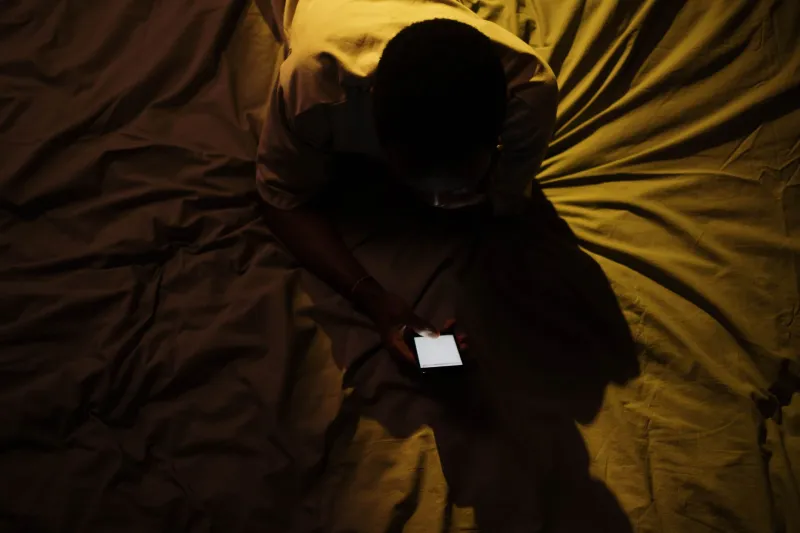
It starts the same way for a lot of players. The house goes quiet. The kids are down, the partner's asleep, the dog's stopped whining. You grab a cold drink from the fridge, sink into the couch, and open up your phone. Within minutes, the reels are spinning and you're somewhere else entirely — somewhere louder, brighter, and a whole lot more interesting than your lounge room at 1am.
Late-night gaming is a genuine phenomenon among Australian online casino players, and it's not just anecdotal. Platform data consistently shows spikes in activity between 11pm and 3am across the eastern states, with a second wave rolling through WA as the east coast winds down. So what's actually going on? Why do so many Aussies feel like they play better — and maybe even win better — when the rest of the country is fast asleep?
The Brain After Dark: What Science Says About Nighttime Decision-Making
It turns out your brain at midnight is a genuinely different beast from your brain at noon. Sleep researchers have been studying circadian rhythms — the body's internal 24-hour clock — for decades, and the findings are fascinating for anyone who likes to place a bet.
During the late evening, the brain's prefrontal cortex, which handles risk assessment and impulse control, begins to dial back its activity. At the same time, dopamine sensitivity tends to increase as the body prepares for the heightened emotional processing that happens during sleep. The practical upshot? You're more emotionally reactive, more open to risk, and — here's the wildcard — potentially more intuitive.
For casino gaming, that's a potent combination. Some players describe a kind of tunnel vision that sets in after midnight, a narrowing of focus that strips away the mental noise of the day. The inbox anxiety, the work stress, the running grocery list — all of it fades. What's left is just you, the game, and the next spin.
That said, the same neurological shift that sharpens focus can also dull the brakes. Fatigue-related decision-making has a well-documented tendency to push people toward higher-risk choices, which is worth keeping in mind when you're three hours deep into a session and considering doubling your bet on a hunch.
The Solitude Factor: Gaming Without an Audience
Ask veteran players why they prefer late nights, and the word 'freedom' comes up a lot. Freedom from interruptions, sure, but also freedom from the social performance of daytime life.
Daytime gaming — even at home — carries invisible pressure. Someone might walk in. You might feel like you should be doing something productive. There's a low-level guilt that a lot of players admit colours their sessions during business hours. After midnight, that evaporates.
One player from regional Victoria, who's been playing online pokies for about four years, put it this way: "During the day I'm half-thinking about a dozen other things. At night it's just me and the game. I make better calls because I'm actually paying attention."
That sense of privacy isn't just psychological comfort — it translates into longer, more deliberate sessions. Players who game late tend to spend more time on a single title rather than bouncing between games. They read the paytables. They test out bonus mechanics. They treat it less like a quick flutter and more like an actual hobby.
What Casinos Know That You Might Not
Online casinos — the good ones, anyway — are paying close attention to when their players show up. Time-of-day data is among the most valuable behavioural insights an operator can collect, and it shapes everything from when promotional offers are sent to which game categories get featured on the homepage.
It's no coincidence that some of the most aggressive bonus offers land in your inbox around 10pm. Operators know that players in a late-night mindset are primed for engagement. They're relaxed, they've got time, and they're in exactly the kind of exploratory headspace that leads to trying a new game or taking a punt on a higher-variance slot.
The flip side of this is that responsible platforms also use time-of-day data to identify players who might be pushing into risky territory — extended sessions that creep past 3am, escalating bet sizes in the small hours. The same data that drives marketing also drives safeguards, at least at the operators worth playing with.
The 'Witching Hour' Effect: Myth or Something More?
Among dedicated players, there's a persistent belief that certain hours are simply luckier than others. The 'witching hour' — roughly midnight to 2am — gets talked about in forums and chat rooms with a kind of reverence. Players swap stories about jackpots landed, bonus rounds triggered, and streaks that seemed to defy probability during those hours.
From a pure mathematics standpoint, an RNG-powered slot doesn't care what time it is. The random number generator is indifferent to your timezone. Every spin is statistically independent.
But here's where it gets interesting: the perception of luck matters. Research into cognitive performance and gambling suggests that players who feel focused, relaxed, and 'in the zone' make fewer impulsive errors. They stick to their limits. They choose games that suit their bankroll. They walk away when they should. In that sense, the witching hour effect might be less about the games and more about the player — a version of you that's tuned in, distraction-free, and running on instinct rather than obligation.
That's not nothing. In a game where discipline is half the battle, showing up as your sharpest self is a genuine edge.
Playing Smart in the Dark
If you're a confirmed night owl, a few practical things are worth keeping in mind before you settle in for a late session.
First, set your limits before you start, not after you've been playing for an hour. Fatigue erodes willpower gradually, and the player who sat down at midnight with clear intentions is a different person by 2am. Use the deposit and session limits that reputable platforms offer — set them in advance and treat them as non-negotiable.
Second, stay hydrated and take breaks. It sounds basic, but the physical reality of late-night gaming — poor posture, screen glare, dehydration — affects cognitive performance more than most players admit.
Third, pick games that match your energy. High-concentration table games like blackjack or poker demand a level of mental sharpness that fades with fatigue. If you're gaming late for the vibe rather than the strategy, leaning into slots or live dealer roulette might actually suit the moment better.
The Night Belongs to the Bold
There's a reason Wildcard City feels different after dark. The chats are quieter, the games feel more personal, and somewhere in the silence between spins there's a particular kind of electricity — the feeling that anything could happen and nobody's watching.
For a lot of Australian players, that's exactly the point. The late-night session isn't just a habit. It's a ritual. A space carved out of the chaos of daily life where you're the one calling the shots, even if the reels have other ideas.
Just remember: the best players know when to spin and when to switch off the screen. The witching hour is only magic if you're still sharp enough to enjoy it.