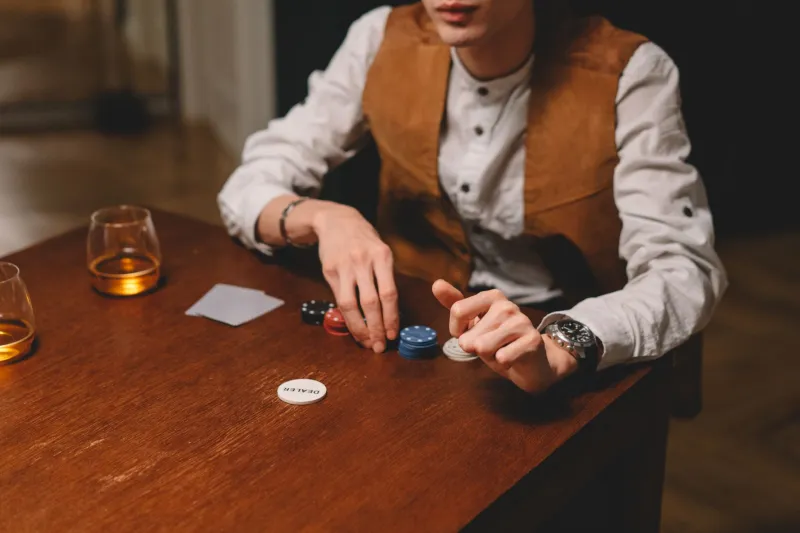
Poker Face, Casino Grace: How Aussie Card Sharks Are Bringing the Felt to the Broader Casino Floor
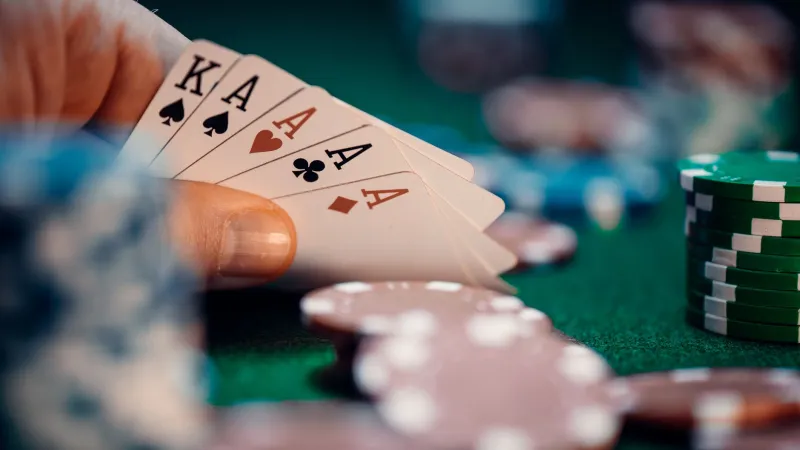
There's a particular kind of Aussie casino player who doesn't just rock up and punt blindly. They watch. They calculate. They know when to push and, more importantly, when to fold — and not just at the poker table. Increasingly, seasoned card players are taking the mental toolkit they've built over years of Texas Hold'em and Omaha and road-testing it across the full spectrum of online casino games. The results, by most accounts, are genuinely interesting.
It's not about cracking a random number generator with a bluff. It's about bringing discipline, emotional intelligence, and calculated decision-making into spaces where most players are running purely on gut feel and vibes.
What Poker Actually Teaches You (That Most Players Never Learn)
Poker is, at its core, a game about incomplete information and managing risk under pressure. You're never working with the full picture. Sound familiar? That's basically every casino game ever made.
The concepts that serious poker players internalise — pot odds, expected value, bankroll management, reading variance — aren't poker-exclusive ideas. They're frameworks for thinking clearly when money is on the line and emotions are trying to steer the ship.
Melbourne-based player Darren, who spent several years grinding low-to-mid stakes poker before transitioning to broader online casino play, puts it plainly: "Poker taught me that bad outcomes and bad decisions are two completely different things. You can make a brilliant call and still lose the hand. Once you separate the result from the process, everything changes — whether you're at the poker table or spinning a bonus round on a pokie."
That distinction — process versus outcome — is arguably the most transferable lesson poker offers. And it's one that casual casino players almost never make.
Pot Odds Thinking on the Pokies Floor
Okay, so pokies don't have pot odds in any literal sense. But the underlying concept — is the potential return worth the cost of the action? — absolutely applies.
Poker players who migrate to slots tend to approach RTP (return to player) figures the way they'd approach pot odds: as a rough guide to whether a game is worth their time and bankroll over a session. They're comparing volatility profiles, looking at bonus frequency, and asking whether the expected variance on a high-volatility slot aligns with their current bankroll depth.
Sydney player Renata, who played semi-competitive poker for five years before shifting primarily to live dealer blackjack and high-variance slots, describes it this way: "In poker, you learn to pick your spots. You don't shove all-in every hand just because you're bored. I apply the same logic to which games I play and when. If my bankroll can't sustain the swings of a particular pokie, I don't play it — no matter how pretty the graphics are."
This kind of game selection discipline is almost completely absent from how the average player approaches an online casino. Most people click on whatever catches their eye. Poker-trained players are running a quiet cost-benefit analysis before they even hit spin.
Tilt: The Enemy at Every Table
Ask any poker player what kills bankrolls faster than bad luck, and they'll say tilt without hesitation. Tilt is the emotional spiral that kicks in after a bad beat — the irrational urge to chase losses, play recklessly, or abandon strategy entirely because you're angry, frustrated, or just desperate to get even.
Casino games are absolutely lousy with tilt triggers. A cold run on blackjack. A bonus round that pays nothing. Five spins without a scatter. These moments are designed — whether intentionally or not — to provoke exactly the kind of emotional response that leads to poor decisions.
Poker veterans recognise tilt the moment it starts creeping in, because they've spent years learning to identify and manage it. Brisbane player Jason, who's been playing online poker since the mid-2000s, says his tilt awareness has become his single biggest edge in casino gaming. "I know when I'm starting to chase. I know when I've stopped playing with my head and started playing with my feelings. That awareness alone has saved me a lot of money. Most players don't even know they're tilting — they just think they're having a rough session."
The fix isn't complicated: step away, reset, come back fresh. But knowing when to apply that fix requires a self-awareness that poker, uniquely, tends to develop through repeated, sometimes painful, experience.
Position and Table Selection in Live Dealer Games
Live dealer games are where poker psychology arguably finds its most direct application outside of cards. Blackjack, baccarat, and live roulette all involve real-time decision-making, pacing, and in some cases, interaction with other players or the dealer.
Poker players tend to be highly attuned to table dynamics — the speed of play, the temperament of the dealer, the behaviour of other players. In live dealer blackjack, for instance, experienced poker players often gravitate toward tables with fewer players (reducing distractions and speeding up their own decision rhythm), or they pay close attention to how a dealer runs the table before committing to longer sessions.
It's not superstition. It's environmental awareness — the same skill that helps a poker player read a table and decide whether it's worth sitting down.
The Limits of the Transfer
Not everything translates, and it's worth being straight about that. Poker is a game where skill has a measurable, long-term impact on outcomes. Pokies are not. No amount of psychological discipline will change the mathematical reality of a random number generator.
What poker psychology can do is help players manage their bankroll more intelligently, avoid emotionally-driven decisions, and approach casino gaming with a clearer head. It won't turn a negative-expectation game into a winning one. But it can absolutely reduce the rate at which players bleed money through poor habits and emotional play.
Renata puts it well: "Poker didn't teach me how to beat the casino. It taught me how to beat myself. That's actually the harder problem."
The Wildcard Advantage
There's something fitting about the poker-to-casino crossover happening in Australia's online gaming scene. Australians have always had a taste for reading a room, backing themselves, and playing the long game — whether that's at the pub poker table or on a live dealer baccarat stream at midnight.
The players bringing poker psychology into the broader casino space aren't trying to cheat the system. They're just playing smarter than most — with a cleaner mental framework, better emotional control, and a clearer-eyed view of risk. In a space where the house always holds an edge, that kind of discipline is about as close to a wildcard as you're going to get.
And at Wildcard City, that's exactly the kind of play we're here for.